Manal Ali Mahmoud: “The Dimensions of What Is Known as the ‘Strange Faces Law'”
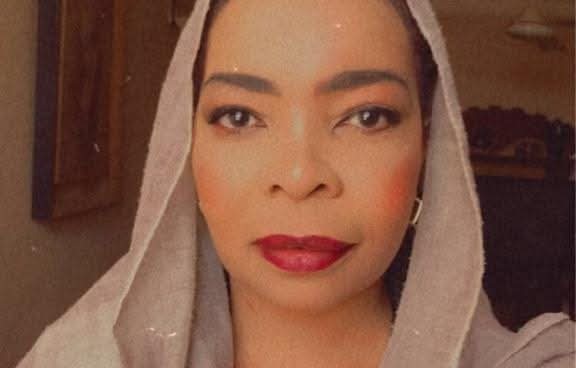
By: Manal Ali Mahmoud
Introduction:
In the midst of the absurd war that has reshaped language, politics, and security in Sudan, a term has recently emerged “The Strange Faces Law.” This floating phrase exploits tribal and racist sentiments simultaneously. However, behind this phrase hides a dangerous political, military, and economic project that seeks to redraw Sudan’s demographic map through forced displacement, erasure, and the violent redistribution of both resources and people.
Firstly: From the Law to the Weaponized Slogan
In war, terminology is not neutral. It becomes part of the battlefield, used as a weapon to justify violations, assassinations, and organized arrests. In the case of “strange faces,” the term started as a question of identity and quickly morphed into a tool for targeting, mobilization, and exclusion. Who are the strange faces, and who determines that? What are the indicators—color, dialect, clothing, or just a feeling?
This slippery term leaves room for field leaders to execute their own classifications without oversight. It turns social suspicion into a political mandate, and the prevailing state of chaos becomes fertile ground for targeting thousands under the pretense of security and protection.
Secondly: A Precedent in the World’s History
This isn’t the first time in history that a government or de facto authority has used such ambiguous terminology to target specific groups. In Rwanda, the Hutu regime used “cockroaches” as a term to describe the Tutsi population, which fueled genocide. In Nazi Germany, terms like “subhuman” were applied to Jews, Roma, and others to justify mass extermination.
The international community later criminalized such practices, not only because of the violence they unleashed, but because of the ideological frameworks that enabled extermination through legal and cultural means.
Thirdly: Legalizing Racism
The most dangerous aspect of what is now known as the “Strange Faces Law” is its contribution to legalizing racism. It provides a thin legal and social cover for racial profiling, arbitrary detention, and the marginalization of entire ethnic or regional communities. It grants militia leaders or individuals in power the ability to label anyone from Darfur, Kordofan, or even Blue Nile as a “stranger,” even if they were born and raised in Khartoum.
The irony lies in the fact that those who use this term may themselves have no rooted belonging to Khartoum or any urban civic heritage—many are newcomers, politically or militarily empowered by the war. Yet they speak in the name of a city that never authorized them.
Fourthly: The Inversion of the Victim-Perpetrator Equation
One of the most grotesque outcomes of this war has been the inversion of truth and lies. The victims of war crimes, massacres, and ethnic cleansing—who have lost their homes, families, and futures—are now labeled as “strangers.” Meanwhile, those who commit crimes are granted the power to define who belongs and who does not.
Thus, the discourse of “strange faces” becomes a continuation of the genocide project—not only through bullets and fire, but through language, labeling, and exclusion.
Fifthly: A Question for the Transitional Government and the International Community
Is the transitional government aware that allowing such terms to circulate without condemnation constitutes complicity in the crime? Is the international community paying attention to how language is used to perpetuate violence?
Silence toward the “strange faces” terminology today may well be remembered tomorrow—when tribunals convene and justice is sought—not just against those who pulled the trigger, but those who armed the public discourse with hate and allowed it to spread like wildfire.
Sixthly: The Selective Urban Memory
The discourse of “strange faces” thrives on a fabricated urban memory—one that assumes Khartoum has always been an ethnically pure, closed city. But history refutes that. Khartoum is a city built by the hands of displaced, marginalized, and hopeful migrants. It is a mosaic of regions, tribes, and dreams. To suddenly imagine that it had a “pure” identity now threatened by “newcomers” is not only historical revisionism—it is the beginning of fascism.
Those who chant against “strangers” are, in fact, waging war on the idea of the capital as a shared space. And that is a direct threat to any democratic future in Sudan.
Seventhly: The Silence of the Elites
The political and media elites in Sudan—those who should be the first to reject racism and violence—have largely remained silent. Their silence is not neutrality; it is complicity. Their hesitation to condemn the “strange faces” discourse exposes a deep-rooted fear of losing dominance, or worse, a hidden approval.
This silence does not only reflect cowardice, but also highlights the failure of the political class to adopt a national, inclusive vision. It reveals that the old alliances of privilege and power are still intact, adapting themselves to new uniforms and new wars.
Eighthly: The Strangest Face of All – The State Itself
If we were to apply the logic of “strange faces,” then the strangest face in Sudan today is the state itself.
A state that no longer knows its people.
A state that appears only in the form of militias or in bulletins of aerial bombardments and hunger.
A state whose institutions have collapsed, whose values have been traded, and whose authority has dissolved except in its violence against the vulnerable.
Yes, the strangest face in this devastated land is the face of a state that abandoned its citizens and then claimed that others were strangers.
Ninthly: The Danger of Normalizing the Logic of Exclusion
The greatest danger lies not in the law itself, but in the normalization of its underlying logic.
The repetition of such terms by security figures, governors, and state officials means that this discourse has become institutionalized—embedded in official mentality, and thus justified in practice.
The silence of society, its exhaustion, or its submission to fear makes exclusion seem like a national policy, and turns the victims into suspects merely because they are different.
Today, it is “strange faces.”
Tomorrow, it may be “strange dialects,” or “strange colors,” or “strange religions.”
And suddenly, we are no longer a country, but a closed circle of sameness—intolerant of any diversity, however rooted or legitimate it may be.
Conclusion
The war has distorted everything—language, perception, values, even common sense.
It is no longer strange that the same state that failed to protect its people now turns to punish them for their mere presence.
It is no longer shocking that those displaced by bombs and militias are now chased by identity-based laws.
It is no longer surprising that victims are labeled as strangers, and that their survival becomes a threat to “national security.”
This is not governance—it is extermination by policy.
This is not law—it is a mask for racism.
And this is not a country—it is a machine that feeds on its own people.
If history teaches us anything, it is that nations that legalized exclusion fell into disgrace and never rose again—unless they confronted their past with honesty, not with denial or slogans.
Let us not wait for more shame.
Let us not repeat the mistakes of others.
Let us not betray what is left of our shared humanity.
About The Author