Peace Government Welcomes UN Security Council Deliberations and Backs Roadmap to End Sudan’s War
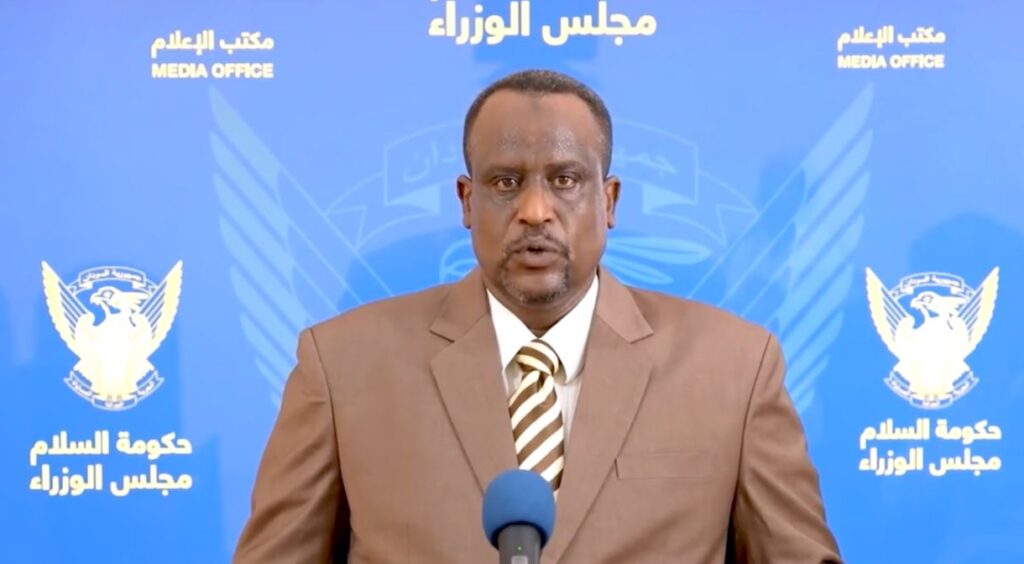
The Transitional Government of Peace has welcomed the UN Security Council’s deliberations on Sudan and backed a roadmap beginning with a humanitarian truce, followed by a permanent ceasefire and a civilian-led democratic transition, while reaffirming its commitment to a negotiated end to the war, unrestricted humanitarian access, and accountability for violations of international law
Nyala: Blue News
The Transitional Government of Peace in Sudan has welcomed the UN Security Council session held on June 26, 2026, to discuss developments in Sudan, expressing support for calls made by several speakers for a humanitarian truce that would ensure unrestricted humanitarian access across the country.
In a statement issued by its Minister of Foreign Affairs, Amar Amoun, the government affirmed its support for the roadmap proposed by the Quad — the United States, the United Arab Emirates, the Kingdom of Saudi Arabia, and Egypt — which begins with a humanitarian truce, progresses toward a permanent ceasefire, and culminates in a civilian-led transition to a democratic government.
The government said its position has remained clear since the outbreak of the war: readiness to engage constructively with all initiatives aimed at ending the conflict and creating conditions for a comprehensive settlement that meets the Sudanese people’s aspirations for peace, justice, and stability.
The statement said the government had responded positively to every initiative calling for negotiations to end the war, while accusing the Port Sudan authorities of consistently rejecting invitations to participate in peace efforts. It cited the latest example as the rejection by the so-called Sovereign Council of a U.S. proposal intended to guarantee sustained and unhindered humanitarian access across conflict lines and international borders.
The Peace Government also welcomed the U.S. Treasury Department’s announcement of a second round of sanctions related to Sudan over the use of chemical weapons, describing the move as an important step toward accountability for violations of international law and obligations under the Chemical Weapons Convention.
The government further welcomed the attention drawn by several Security Council speakers to the impact of drone attacks against civilians in Darfur and Kordofan, saying such attacks had severely hampered efforts to deliver humanitarian assistance to those most in need.
At the same time, the government expressed deep concern over calls by some speakers for an inter-Sudanese political process rooted in existing state institutions. It argued that some of the civilian actors and institutions being proposed for inclusion had participated in the coup that derailed Sudan’s civilian transition, while the military institution itself was responsible, according to the statement, for initiating the war on April 15, 2023.
The statement also criticized what it described as contradictory positions by some members of the international community, saying they call for the protection of civilians while facilitating actions that cause grave harm to civilians through drone strikes and aerial bombardments, resulting in thousands of deaths across Darfur, Kordofan, and northern Sudan.
The Peace Government said the argument that preserving Sudan’s current institutions is necessary to safeguard the country’s unity rests on a false premise, arguing that the same military structures being defended have inflicted suffering on Sudanese people for more than six decades and repeatedly undermined democratic governance through coups and wars, including the current conflict.
It added that the conduct of the military institution itself had prompted the latest U.S. Treasury sanctions, which the government said it strongly welcomed, arguing that strict implementation and enforcement of the measures would limit the ability of the Port Sudan authorities to continue their military campaign.
The Transitional Government of Peace concluded by reaffirming its commitment to a negotiated end to the conflict, unrestricted humanitarian access, accountability for violations of international law, and the establishment of a democratic civilian government that reflects the will and aspirations of the Sudanese people.