Sudanese Army’s Child Recruitment Scandal: Burhan’s Celebration of War Crimes

By Ibrahim Matar
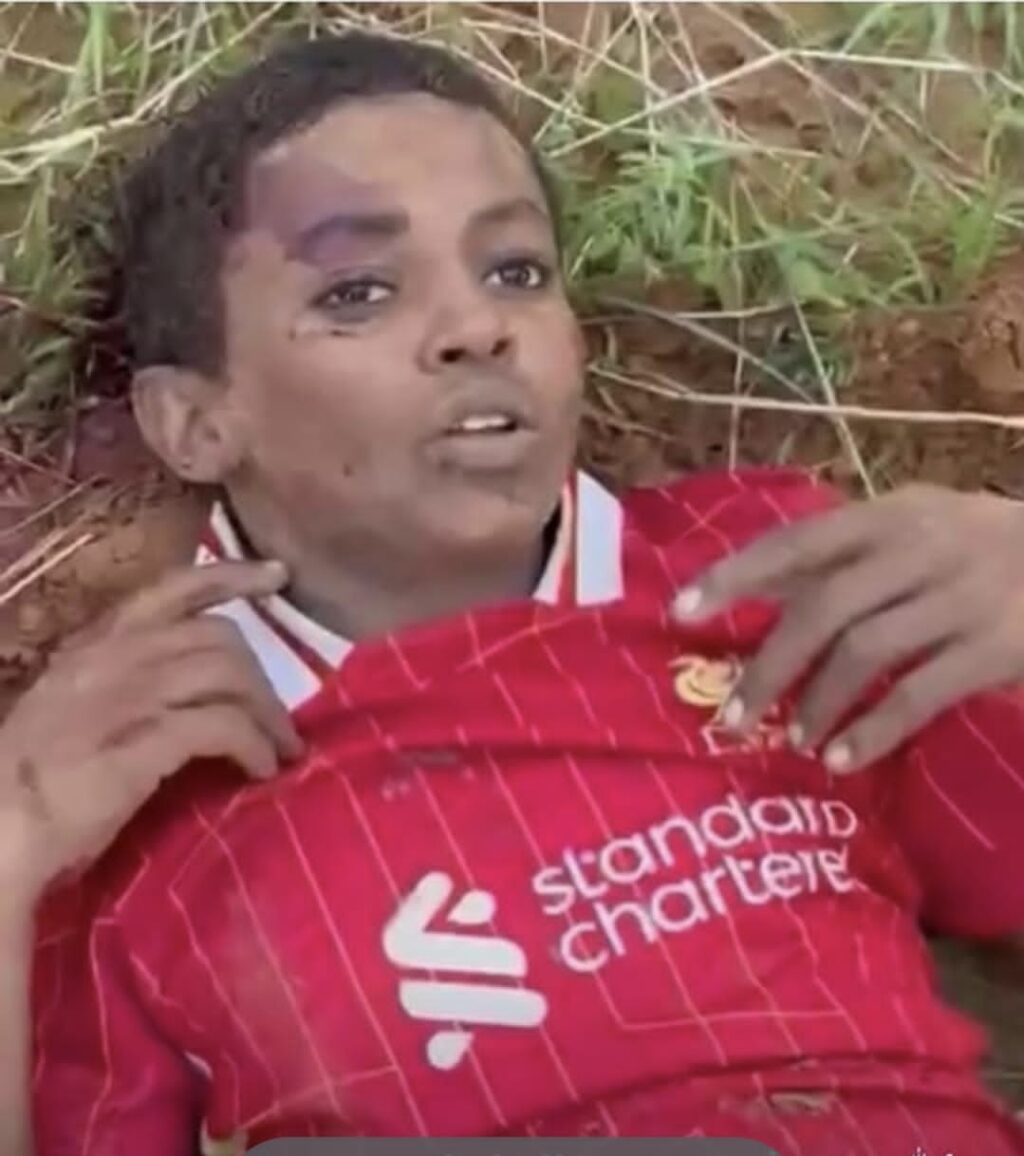
In one of the videos that emerged from the battles in Kordofan on Wednesday, fought between the army and its allied militias on one side and the Rapid Support Forces on the other, a wounded child appears, gasping his final breaths. His faint words reveal that families in his village had been forced to send “a man from every household” as fuel for the extremists’ war. The video ends abruptly, leaving viewers uncertain of the child’s fate — a minor sentenced to death in a grotesque ceremony, eerily reminiscent of the rituals of ancient Egypt, when a maiden was sacrificed to the Nile.
Behind medals and decorations earned for the killing of Colonel al-Bishi, “Kekel” hides, shielding himself with young boys from the villages of East al-Jazira. He enforces forced conscription upon them, hurling children into the jaws of a merciless war raging in Kordofan — a war in which the children of al-Jazira have neither stake nor cause.
Yet, many Sudanese found a grim solace in the deaths of large numbers of fighters from the “al-Baraa ibn Malik” militia during recent battles in Kordofan. These were the same men implicated in atrocities against peaceful protesters at the Khartoum sit-in, and in massacres in Um Rawaba, Medani, Dilling, Bahri, and the infamous slaughter of volunteers at al-Halfaya communal kitchens. Among them was “a mentally ill” man, Muhannad Ibrahim, whom the extremists appointed as a field commander instead of committing him to psychiatric care. He was neutralised in the latest fighting west of al-Obeid, alongside many of his militia comrades.
Tragically, among the militia’s dead was also a child, cynically mourned by the extremists themselves after they had conscripted him, thrust him into the frontlines, and hidden behind his fragile body — a disgraceful display of cowardice and betrayal.
At the same time, the Sudanese Teachers’ Committee issued a statement demanding an investigation into the Minister of Education, after his admission that schoolchildren had been involved in the fighting. The Minister had even decreed that the children of “martyrs of the Battle of Dignity”, as well as student combatants, be exempted from school fees — a tacit acknowledgment of the army’s crime of child recruitment. Verified reports further indicate that the army has conscripted minors into the so-called “Popular Resistance”, “Shield of Sudan”, and “al-Baraa ibn Malik” formations, assigning them logistical tasks dangerously close to the frontlines.
The generals know full well that the recruitment and use of children in armed conflict is a blatant violation of international treaties on the rights of the child. They also know it constitutes a fully-fledged war crime. Yet, in their desperation to prolong their grip on power, they turn a blind eye to every outrage.
The extremists may believe that their videos of executions in Medani and Bahri, their roadside killings, and their slaughter of a teacher in Um Rawaba have been forgotten. But they are deluded. They will face a bitter reckoning, for such crimes never expire with time.
“Reforming the current army is impossible; a new one must be built,” said the former Minister of Justice in Abdullah Hamdok’s government. He dismissed arguments that dissolving the army would compromise Sudan’s sovereignty, citing the precedent of Ethiopia, whose military was disbanded under Meles Zenawi after Mengistu’s fall. “If the term ‘dissolution’ offends some, let us instead speak of the necessity of founding a new army,” he added.
Indeed, a single glance at today’s Sudanese army — fractured by tribal, jihadist, and even foreign militias — makes clear the depth of its malaise. From aerial bombardments of civilian neighbourhoods, schools, and hospitals — which have killed thousands — to the use of internationally prohibited chemical weapons, the targeting of water supplies and livestock, and the alliance with extremist groups who have butchered activists, volunteers, and revolutionaries, the army has severed all bonds of trust with the Sudanese people.
With the conscription of children as its latest crime, Burhan’s army has set a new record in infamy. The Sudanese must brace themselves for yet another chapter in their struggle against the so-called “brothers of the devil”.